The AI CapEx Divide: What FAANG’s Q1 2026 Results Really Show
For a while, AI has been discussed mainly as a product story.
Who has the best model? Who has the best assistant? Who has the best demo?
Q1 2026 results suggest the discussion is shifting. In that quarter, Meta, Alphabet, and Amazon spent over $100 billion on capital expenditures, while Apple and Netflix barely registered on the same scale.
AI is no longer just a product story. It is becoming a capital allocation story. And that changes the way we should read Big Tech earnings.
The key question is no longer only who has AI. It is:
Who is paying for the infrastructure layer of AI? Who is monetizing that layer directly? And who is benefiting from AI without carrying the same CapEx burden?
That is what stood out to me in the latest results from Meta, Alphabet, Amazon, Apple, and Netflix.
The results
The five companies fall into three groups — and the gap between them is larger than it looks.
Alphabet and Amazon are spending at infrastructure scale because they monetize infrastructure directly. Cloud contracts, compute demand, enterprise AI—the revenue moves with the spending. Free cash flow is taking a hit, but the logic is clear.
Meta is spending at a similar scale, but the return is harder to see. AI is improving its ad business—smarter targeting, better recommendations—but that differs from selling infrastructure. The bill is growing faster than the proof.
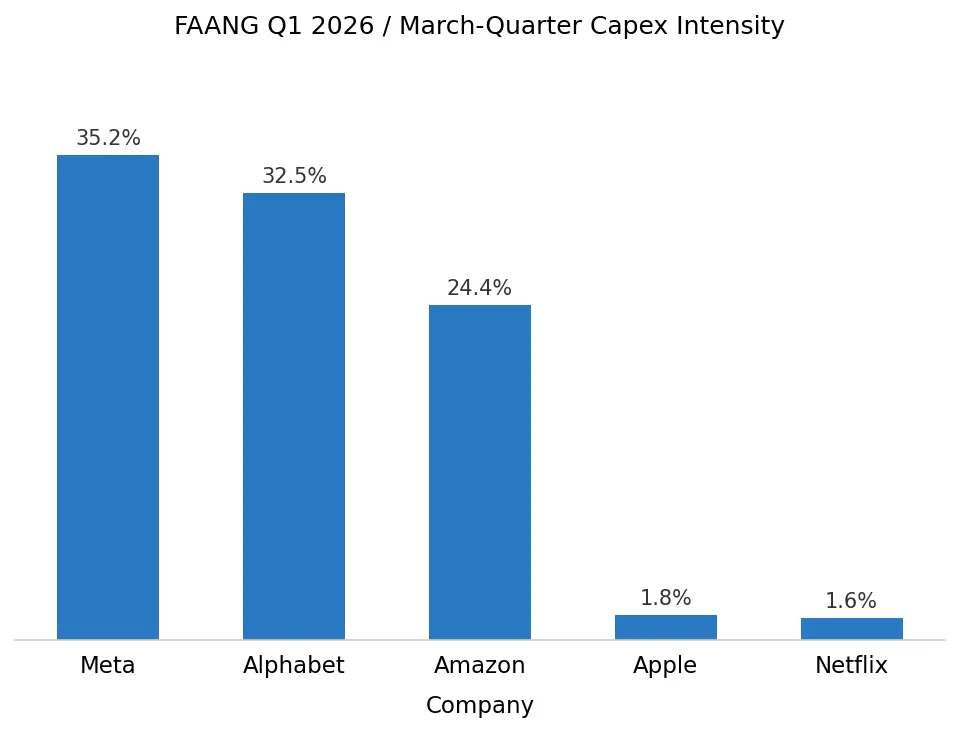
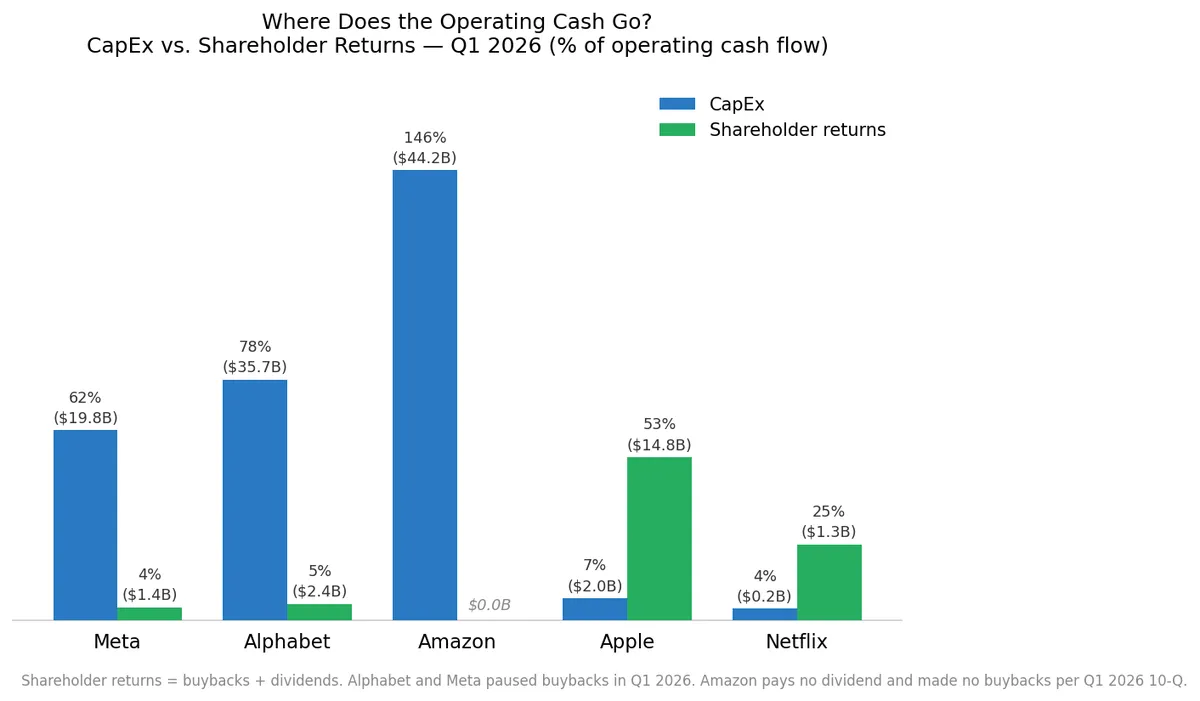
Apple and Netflix are in a different category entirely. Both get real AI value: Apple through on-device intelligence and its own chips, Netflix through recommendations and content workflows, without owning the underlying infrastructure. Apple made the choice explicit this quarter with the same earnings call and a $100 billion buyback. The cash that could have gone to data centers went to shareholders instead. The chart below shows this across all five companies and how little operating cash the infrastructure owners had left to return.
The takeaway
This is the real divide revealed in Q1 2026. Not who has AI, everyone has AI. But who is financing the infrastructure layer, and who is capturing the benefits at a fraction of the cost.
Look at what that spending does to the cash flow. Amazon is the single largest spender in absolute terms; $44.2 billion in a single quarter, more than its entire operating cash flow.
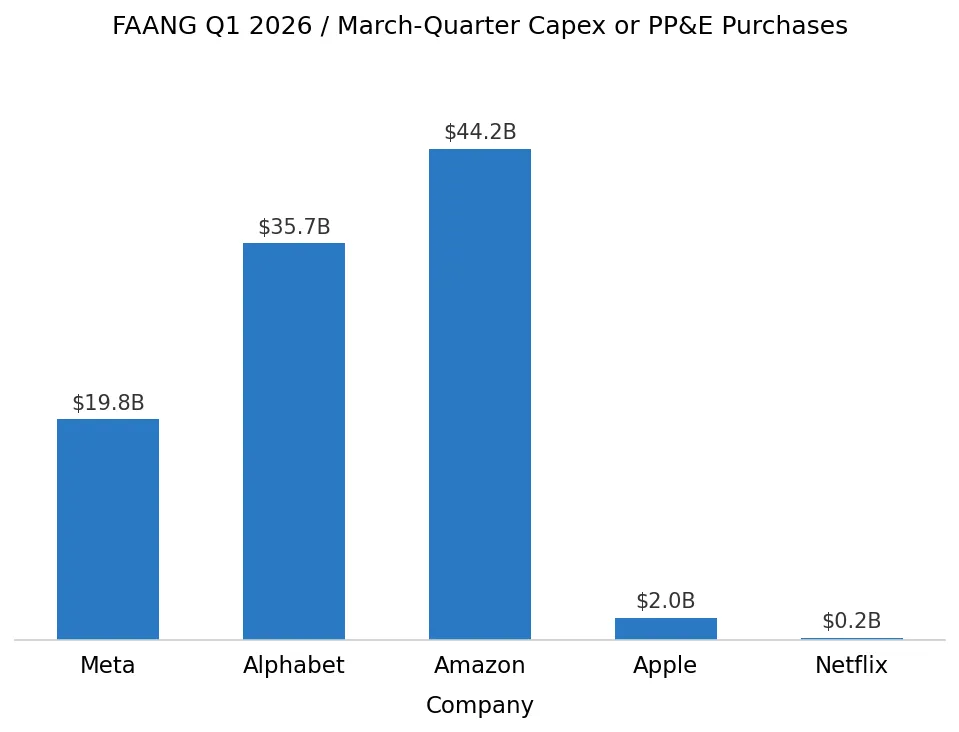
That is why it finished the quarter with negative free cash flow. Apple, spending just $2 billion, generated $26 billion of it and returned most to shareholders.
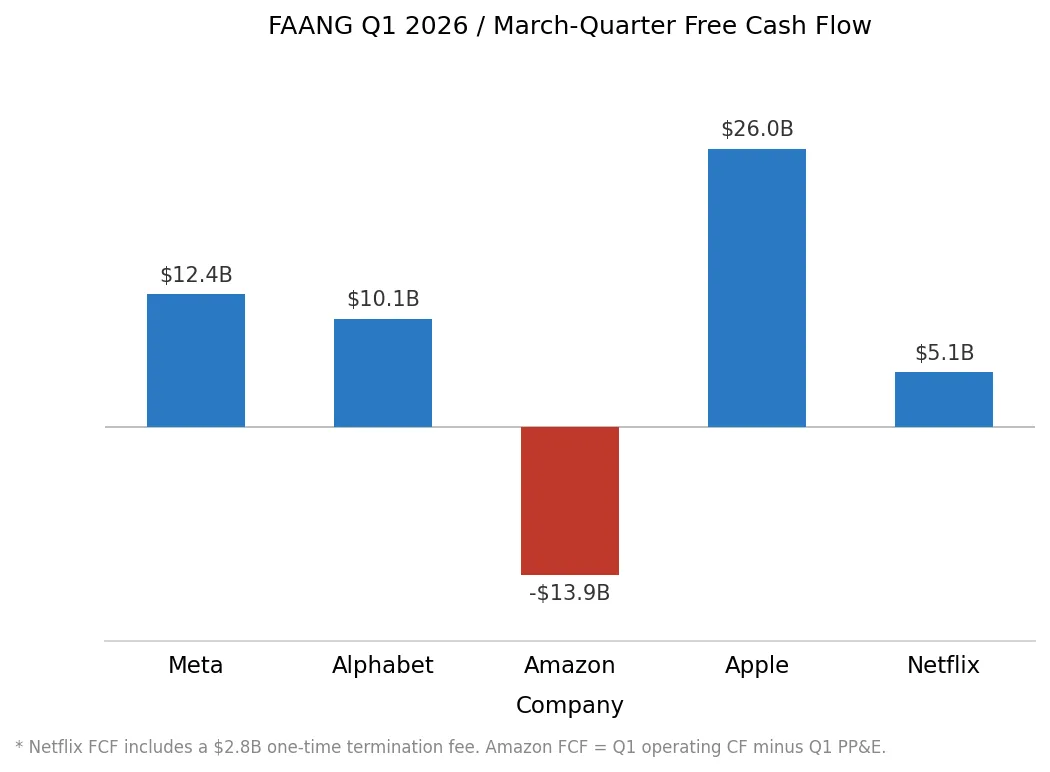
That gap is not a rounding error. It is a strategic choice playing out across the entire sector, and the central question for the next few years is whether the companies carrying the heaviest load will get paid back before the next cycle begins.
— Yiğitalp Y.
References
- Meta Platforms — Q1 2026 Earnings Release
- Meta Platforms — Q1 2026 Form 10-Q (SEC)
- Alphabet — Q1 2026 Earnings Release
- Alphabet — Q1 2026 Form 10-Q (SEC)
- Amazon — Q1 2026 Earnings Release
- Amazon — Q1 2026 Form 10-Q (SEC)
- Apple — Q2 FY2026 Earnings Release (March Quarter)
- Apple — Q2 FY2026 Form 10-Q (SEC)
- Netflix — Q1 2026 Shareholder Letter
- Netflix — Q1 2026 Form 8-K (SEC)
- Apple Newsroom — Apple Will Spend More Than $600 Billion in the U.S. Over the Next Four Years
- Motley Fool — Apple Just Gave Investors a $100 Billion Reason to Rethink the AI Spending Race